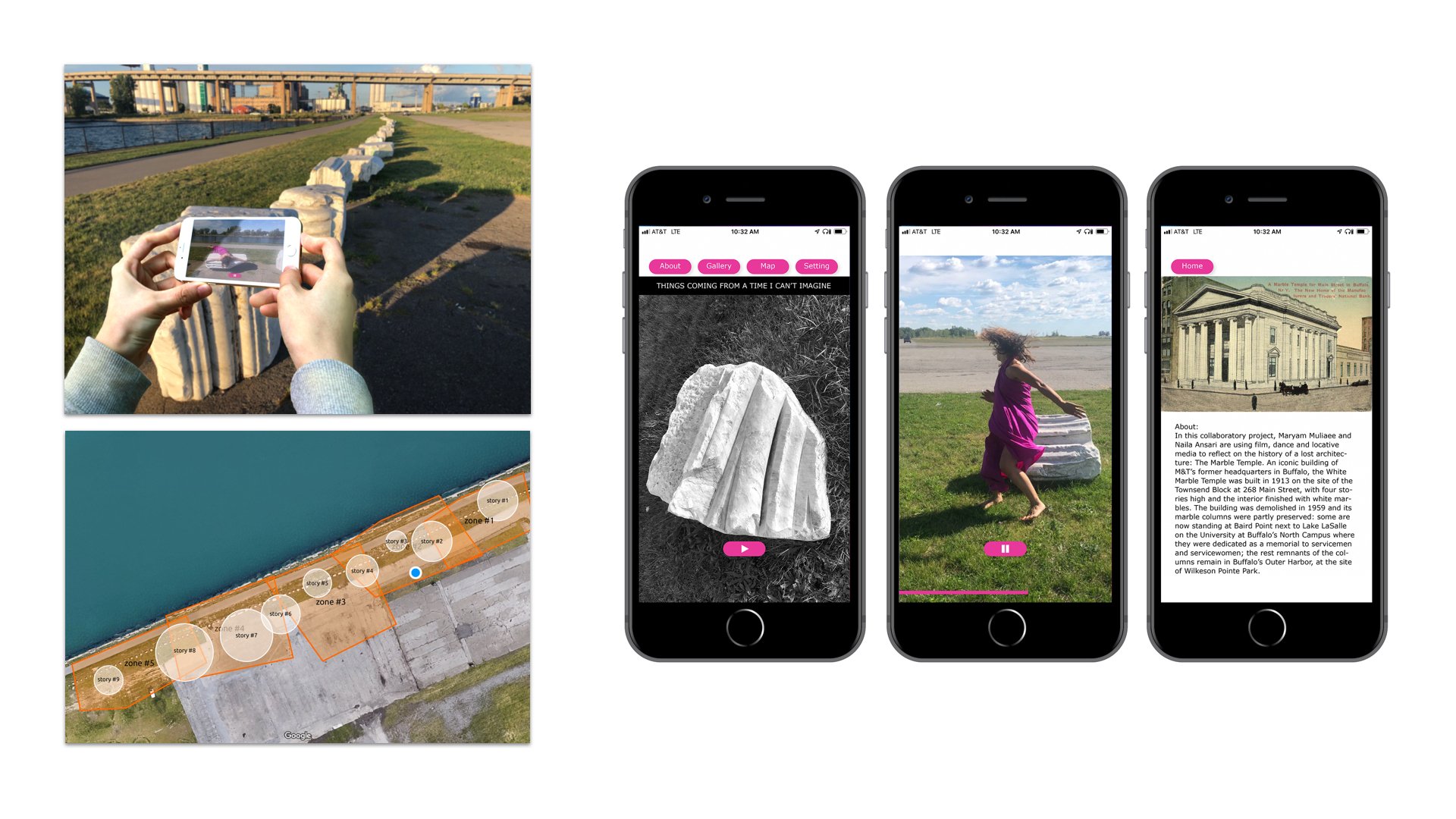
Embodied Landscape
Embodied Landscape is a site-specific video performance filmed at Wilkeson Pointe Park at Buffalo’s Outer Harbor, where the fragments of marble stones from one of iconic Buffalo’s lost architecture, The Marble Temple, the former headquarters of M&T Bank currently remains. The work stages a bodily encounter with marble fragments dispersed across the city and in the site after the building’s demolition in 1959.
The video features an on-site performance by Naila Ansari, whose jazz-based movement vocabulary emphasizes improvisation and responsiveness. Ansari does not follow a predetermined choreography, but her gestures emerge through encounters with the site’s textures, surfaces, weight, and spatial rhythms through touch, balance, stillness, and full-body contact. The contact between skin and stone brings together two forms of material memory: the body, which remembers through movement, touch, and sensation, and the marble, which bears traces of architectural and urban history. Because touch requires proximity and reciprocity, the performer does not simply act upon the stone; her body is also shaped by the contrast in texture, resistance, temperature, and weight. History is therefore encountered physically rather than observed from a distance.
At moments, the distinction between body and landscape begins to dissolve. The performer’s body visually echoes the forms and surfaces of the marble, becoming another element within the site. This convergence of skin and stone shifts attention away from the monumentality of the lost building and toward a more intimate form of remembrance grounded in vulnerability, care, and bodily presence.
By placing a female body in dialogue with the remains of a former financial institution, the work also redirects attention from architecture as a symbol of permanence and institutional power toward lived and embodied experience. The lost Temple survives not as a stable or fully recoverable structure, but through its fragments and through the temporary relationships created among body, material, sound, and place.
Rather than digitally reconstructing the Temple or presenting a conventional historical account, the performance introduces a living body into a landscape shaped by architectural absence. It proposes that places endure not only through documents and monuments, but also through physical engagement, sensory experience, and acts of remembrance. Movement animates the dispersed fragments, creating new relationships between body, ruin, and place while acknowledging that the original building cannot be fully recovered.